
 |
 |
 |
 |
 |
 |
 |
 |
 |
 |

 |
Soundtrax: Episode 2011-9
August 30, 2011By Randall D. Larson
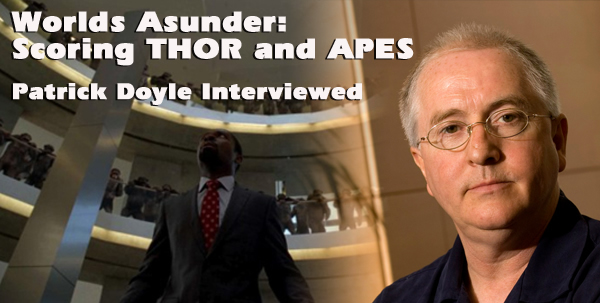
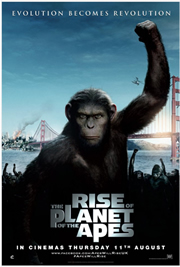
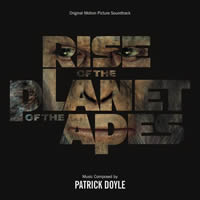
Scottish composer Patrick Doyle used to be best known for his sensitive dramatic scores for Kenneth Branagh’s Shakespearean films like HENRY V (1989), MUCH ADO ABOUT NOTHING (1993), HAMLET (1996), and LOVE’S LABOURS LOST (2000), as well as Branagh’s adaptation of MARY SHELLEY’S FRANKENSTEIN (1994) and such melodic scores as QUEST FOR CAMELOT (1998), Ang Lee’s SENSE AND SENSIBILITY (1995) and others. But with recent scores for large-scaled fantasy/action films like HARRY POTTER AND THE GOBLET OF FIRE (2005), ERAGON (2006), and NIM’S ISLAND (2008), Doyle has stepped into the spotlight of scoring cinematic spectaculars. With his scores this summer for Branagh’s take on Marvel’s THOR and Rupert Wyatt’s well-received RISE OF THE PLANET OF THE APES, Doyle continues to engage his large orchestra chops while reminding anybody who needed it that he is still just as capable with big orchestra action scores as with intimate dramas. I spoke to Doyle in early August about his music for these popular summer blockbuster.
Q: When you first came into THOR, what were Kenneth Branagh’s initial instructions to you about the kind of music he wanted you to compose?
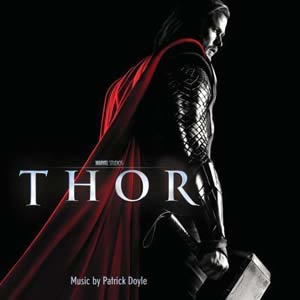
Patrick Doyle: We both discussed in detail the imagery and the concept of THOR. With its larger than life characters, we were both acutely aware that the music shouldn’t hyperbolize too much the action. It should be as contemporary sounding as was necessary for the film, but still should retain an element of classicism because of this classic character and the classic history behind the God of Thunder. He was also very keen that I inject a strong melodic sense and that the score should reflect thematic material. The main theme should reflect that his character came from Norway and had a sort of Nordic element in terms of the music from that part of the world, which I tried to accommodate. There were many discussions along the way about the direction of the score, always keeping in mind that the music shouldn’t try to do too much in order to emulate the action itself, whenever it was exciting and big and grand. He said he brought his classical experience in terms of dealing with great actors to the performances, and I suppose our relationship in terms of dealing with classical subjects was one of the reasons why, when he was chosen, that he felt I could add to that too.
Q: You’ve said that you found a commonality between THOR’s Scandinavian mythos and your own Celtic background. Would you elaborate on this?
Patrick Doyle: I worked many years ago on a film called INTO THE WEST that dealt with Celtic mythology, and I was brought up listening to folk songs that were part of Scottish/Celtic/Irish culture. The harmonies are much more 20th Century harmonies, or even late 19th Century harmonies, that accompany the main theme for THOR – in fact if you play it as a modal theme, it becomes much more Celtic. We wanted a theme that was a theme of home, that reminded Thor of where he came from and gave a sense of this world that he inhabited, Asgard, and where Asgard itself emerged from.
Q: How did you select your musical palette for this score and how were the more distinctive instruments such as the Cor Anglais used to voice specific elements of the character and story?
Patrick Doyle: The Cor Anglais gives a sense of antiquity because it’s an instrument that goes back many centuries, in terms of its roots, although the modern instrument came in to being much later. It was actually a hunting horn that ended up becoming the present day Cor Anglais so it has a sort of antiquitous feel about it, as well as a sense of melancholy and broodingness, so when Thor was banished it seemed to be a nice instrument to give you a sense of time, a sense of antiquity, and a sense of longing. It’s quite a mature sounding instrument, and it fit the relationship between Thor and his father. It’s full of pathos; it’s haunting and mysterious.
Q: THOR is both a part of the developing Marvel universe in films, yet there’s a difference: Thor is a GOD! How does one approach scoring Thor as superhero and Thor as God – and then, as your score also accommodates, Thor as man?
Patrick Doyle: Yes! It was very difficult to achieve the right tone in the film from every aspect, whether it was the costumes, the design, and especially story, moving from Asgard back to Earth, getting these transitions smooth and homogenous and seamless, and trying to achieve all those things. It was part of an ongoing process, but I think I went for Thor as this very good-hearted God/man who was stripped of his godhood. This good-hearted icon had a great soul and beneath his anger had a very good, strong heart, a nobility, and that’s what I tried to give him.
Q: How did you treat the love story, which has its own sense of pathos as the film goes on?
Patrick Doyle: I didn’t want to make it too sweet and sugary. He is the godlike creature, larger than life and very manly, and she’s a very strong woman, so I think if I had gone too sugary on it, it wouldn’t have worked. The audience wouldn’t have bought it. What I wanted to convey was this unrequited love from their point of view, I wanted to achieve a sense of great affection that was developing into love.
Q: Yes, because it’s never actually fulfilled in the film.
Patrick Doyle: No, it’s not. That is unusual for a movie because usually the boy gets the girl – but the boy got the girl in a way, and then he let her go and she let herself go, so who knows what would happen in the future with them?!
Q: How would you describe your own personal approach in establishing, developing, and interacting your themes in this score?
Patrick Doyle: In terms of coming up with themes, there is no set pattern for it. It can just suddenly come into your head if you’re sitting and watching something and playing along with it, or it may some into your head when you’re sitting and having a discussion. It comes in different guises, but it’s all based on discussion and on research, I suppose – and reading the script and living with the imagery, with the expectations of the filmmakers. Once you’ve done all that research and had that discussion then you let it percolate and ferment, and then it suddenly emerges. If you think about THOR: he’s a noble creature, he’s missing his home, he’s from the Nordic culture, he’s a god, so something strong and something melancholic, using pathos, these are all thoughts that come into your head when you embark on the score. I remember on HARRY POTTER AND THE GOBLET OF FIRE, I came up with the Potter Waltz as I was sitting in a meeting with the director, and I came up with the theme for APES as I was sitting and having a very late spotting session for that film. But with THOR I had plenty of time to sit down and work on the main theme in a very different way, over a longer period of time, so it varies from project to project.
Q: Like HARRY POTTER, RISE OF THE PLANET OF THE APES is a movie with a pronounced musical history. While the movie and its score are certainly their own entities, what was the effect of having the prior APES scores hanging over you as you began work on the score?
Patrick Doyle: I have to be very honest with you – I wasn’t conscious of these scores. I remember, many, many years ago I’d seen the movie with the Jerry Goldsmith score and I watched the Tim Burton film when it first came out. When I wrote the score for RISE OF THE APES, the only reference made to the Jerry Goldsmith score was that it was actually coming from a screen on the television in the ape compound, and I referred to Jerry’s score in order to bring Dodge’s character out into the situation where he confronts Caesar. Other than that, I wasn’t aware of Jerry’s music or, indeed, any other composer’s music because I didn’t see the point of that – it never even crossed my mind. I remember when I did HENRY V the same potential was there with regard to William Walton’s score [for the 1944 film version]. There was no point in even thinking about it because this was a brand new concept and I would deal with that accordingly. I’ll get some feedback from various people saying that I referred to other composer’s music in this score, but I can honestly say that is not the case. I never listened to anybody’s music, but I scored the story for what it was, the brand new direction of the franchise, and I tackled that accordingly. I think it would be pointless to listen to other composer’s music when I have my own voice and at the same time I’m sure other composers would do the same thing.
Q: What elements of the story and its characters did you center the score around, both thematically and texturally?
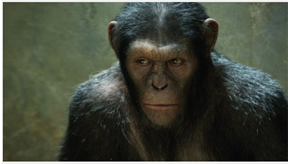
Patrick Doyle: It’s all about Caesar. From the very moment the score begins, although it’s Caesar’s mother who is captured, there’s very much about this unborn hero/future general, and throughout the entire picture, the thematic material is based around two things. One is Caesar’s Theme, which we hear on the very opening, which is a very important thematic motif that develops throughout the movie. The second refers to the Frankensteinian hybrid of this drug that creates this “monster,” this new creature; there is a theme that encapsulates the genetic investigation, the world of Gen Sys, the world that Will inhabits, and the dilemma he has trying to save his father from the ravages of this Alzheimer’s disease. From the Gen Sys music I developed all the action music and the driving string movements, these motor figures. There are much more of these motor rhythms in THOR and in APES than have been in a lot of my scores in the past, although they have been there. I used the device in ERAGON, and in fact my very first film, HENRY V, used it a lot in terms of the drive towards Harfleur and Agincourt.
Q: How did these themes come together as they met the rise of the apes at the film’s climax?
Patrick Doyle: In the end I tried to have the two themes, the two worlds, Caesar’s world and also the world of Gen Sys, play together. These two musical worlds collided as they head toward the OK Corral on the Golden Gate Bridge! So really, all the music was channeled through Caesar, this highly intelligent creature that is a brilliant planner. What was interesting, from the score’s point of view, was there is very little dialog. Much of the movie is like a silent movie in terms of Caesar and his planning in the compound, and that was a very good opportunity for a composer to actually speak for the leading character.
Q: The score embodies some unique instrumental choices – from the ostrich egg that voices Caesar’s theme to cage-slam percussion effects. How were these mapped out and integrated into the score as it developed?
Patrick Doyle: I asked Chuck Michael, the sound guy, if I could get these cage sounds and then maybe we could sample them and use them as a percussion, which we did. He also gave us some very early ape sounds which he’d recorded, and I actually used one of them as one of the driving motifs. When the ape goes “oh-ah-oh-ah-oh” and makes that sound, I used the exact rhythm of that ape sound to achieve this driving, motor theme. So that was a very interesting bonus to be able to work with the sound guys.
Q: How did you come up with the ostrich egg as an instrument?
Patrick Doyle: That was Pedro Eustache [ethnic woodwind player]. He brought in a whole mass of different instruments. Initially we had a singer but we felt the singer was too on-the-nose. We found a sound that blended beautifully with the voice, although in the end we didn’t use the voice, we just used this wonderful sound, which almost sounds voice-like. Pedro came with an incredible wardrobe of instruments, but the only thing we used was one small flute and this ostrich egg. That was incredible. It was just so powerful. He put these holes in the egg, which seemed to be random although they weren’t, and he put on this mouthpiece, like a plastic mouthpiece from a kid’s whistle, and surrounded it with Blu-Tack [adhesive] to seal it. Then he would move the Blu-Tack to change the aperture of the hole. Amazing! Pedro was full of enthusiasm! His work was extraordinary.
Q: In both THOR and RISE OF THE PLANET OF THE APES, was it a challenge to remain within a predominantly melodic percussive/symphonic realm when so many of our large blockbuster scores seem to be essentially rhythm- and electronics-based?
Patrick Doyle: If you listen to my score for FRANKENSTEIN or the score for HENRY V, these scores both had a very strong rhythmic drive. Even in DEAD AGAIN I used African drums, for no other reason than I liked the sound of them! There’s no African reference in the movie! So, the obvious thing to do was to use all the modern palette of drums available for THOR and for APES. In APES, since they came from the Congo, I thought it was important for the audience to know where Caesar came from and to feel his loss and his mother’s loss of being deprived of his culture. So using these African drums and rhythms, we as an audience saw what happened to his mother and saw where he came from, therefore we were engaged with Caesar from the word go. That was the objective. In terms of using percussive sounds, these driving motifs, all I wanted to do really was just contemporize them. I’m always keen to keep the symphonic world alive, and my object in THOR and in APES was to do my best to introduce a fresh symphonic approach to the predilection for electronics and for driving rhythms and ostinato figures. I wanted to do what I’ve always done but do it in a fresh way, for me, as much as possible.
Q: Do fantasy films like these pose a greater musical responsibility than, say, a historical drama or contemporary thriller, simply to bring the fantastical environment and plot points to life?
Patrick Doyle: I don’t think so. I think every single movie has all of those demands. You’re just using bigger forces, generally speaking, for these sci-fi films. But the demands are just the same, they demand fresh ideas, they demand a lot of hard work and the investigation of new sounds, if possible, and close attention to thematic development, to characterizations and the story line. I was once asked what the difference was between scoring live action and scoring animation. I don’t see any difference between watching TOY STORY or THE INCREDIBLES or watching SOPHIE’S CHOICE – it’s still drama. There are characters who need to be addressed. And obviously there are comedy moments, light-hearted moments in animation as in live action, but the demands are the same. It’s rhythm, it’s melody, it’s sound, it’s coloration, it’s drama.
Q: Any thoughts yet on where you may be headed in scoring the animated adventure fantasy BRAVE?
Patrick Doyle: Not yet. I will be sitting down with the filmmakers in the end of August/beginning of September, and serious discussions start from there.
_______________________________________________________________________________
New Soundtracks Releases of Note
AMERICAN FLYER/Mark Kilian/Lakeshore
This digital release proffers a compelling score from South African born composer Mark Kilian, noted for his work in TSOTSI, RENDITION, BEFORE THE RAINS, and, more recently, JOHN CARPENTER’S THE WARD. This independent drama is about a young man who, stuck on the wrong side of the Tijuana border, constructs a flying machine out of a wheel barrow and seeks freedom at the Santa Monica pier. The score is a fairly subdued one, emphasizing guitars, accordions, whistling, and voice, providing furtive snatches of melodies and phrases, although an early constant phrase is a prolonged, sustained piano note that drifts among the orchestration and evokes loneliness, isolation, and out of place, although the score warms and builds confidence as the flyer is built and readied for flight, with “Let the Building Begin” begin one of the score’s most graceful and provocative cues. There are occasional moments of absurdity, as in the electro-calliope-jazz of “Human Piñata” as well as profound serenity, as in the lamentation, “Via Con Dios,” softly intoned by a woman’s voice over steel guitar. The score is well textured, occasionally featuring occasional glimpses of didgideridoo underlying the twanging guitars, and occasional bursts of Mexican music rumbles to the fore. “This movie is set in Tijuana, Mexico,” Kilian said, “and I started out researching for this project by going to Tijuana and spending some time there just soaking up the sounds of the streets, bars, bullfights, parties and life in general. One can always hear music in TJ and unlike most parts of the world the majority of it is live and played by real people. There is even a nightclub with an 18-piece band format that holds thousands of people and it is always full of people dancing which harkens back to the big band days.” While he hadn’t set out to write a Mexican score, Kilian was definitely influenced by all he heard while in Tijuana. “I was also listening a lot to the modern proponents of electronic music in TJ, Nortec Collective as well as Mexican Institute of Sound and other electronica artists in Mexico.”
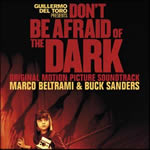
DON’T BE AFRAID OF THE DARK/Marco Beltrami, Buck Sanders/Lakeshore
A thoroughly exquisite horror score built around a compelling waltz motif. Beltrami and Sanders team up again for this creepy monster movie written by Guillermo del Toro and Matthew Robbins, based on the 1973 TV-movie about strange creatures living in a young girl’s new home who want to claim her as one of their own. “The score began with Guillermo del Toro's request for a lullaby for Sally,” said Beltrami. “He and [director] Troy Nixey also asked that we take inspiration from not only the original film's score by Billy Goldenberg but also the classic 60's and 70's horror scores of Jerry Goldsmith, Krzysztof Komeda and Bernard Herrmann. Those were refreshing challenges compared to today's current horror sound and we decided to do a predominantly orchestral score that would feature woodwinds, 2 harps and vibraphones.” After introducing the lullaby motif in track 1, which will cling like silk to the young girl, Sally, who falls prey to the goblin entities, the composers engage in a delightfully Herrmannesque romp reminiscent of the PSYCHO main title theme with added choir and drums that surges along powerfully and opens the film with an air of adventurous romance. This motif will be varied into engaging suspense and action music as the story and score develop, with palpable Herrmannesque undulations in “Into the Basement.” The two motifs join in the gruesomely-named “Gardener Gets Snipped,” as the reverberated music-box is joined by an apprehensive bass line, wispy flutes and percussively grating synth tones, transforming into a harp-led melody over worrisome violins that soon echo the Title theme, the two motifs working together to suggest that Sally should indeed be afraid of the dark. In “Lamb Lamp Lambency,” the gentle music box lullaby is intruded upon by dark electronic reverberations that shatter its calm and ensure a mood of fright takes its place, while “Sneaky Sally” transforms the tune into a dark, pensive reverberation, and “Silly Sally” gives it a ponderous, grimly playful edge. The melody loses its music-box sensibility in “Treesome” (as it did in its introduction on Track 1) to waft waltzlike across the soundtrack like quiet winged things. “Bed Bugs” is a powerful essence of musical fear, exuding through low synth warbles, squeaky woodwind sounds, distant bells, and a ghostly female voice, to blast explosively with an aggressive dissonance of clawed, reaching hands (musically suggesting the album cover art). “Shrink Rap” (great title) is another unsettling ambiance as rolling waves of string patterns and timpani, leading into the following (and quite reasonable) “Sally Leaves,” wherein the Title theme goads the girl in her departure from this place. Beltrami and Sanders unmask the mysterious entities in “Goblin Trouble” and “Goblins in the Garage” with assertive layers of shimmering synth, low-low wandering brass notes, shuddering figures of strings and disturbingly reflective electronica that takes on its own insistent rhythmic progression, distorting the Title theme into a semblance of groaning belligerence and rage. “Return to Blackwood” recenters the score on its elegant and pastoral opening, revisiting Sally’s Lullaby in a radiant pattern; while the closer, “Voices from the Pit” can’t help but remind us that all may not end well after all.
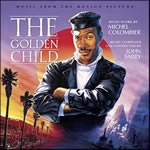
THE GOLDEN CHILD/John Barry, Michel Colombier/La-La Land
A marvelous and stirring John Barry score is revealed for the first time in this 3-disc release. The film, an improbable fantasy featuring Eddie Murphy after his star hit in BEVERLY HILLS COP, was given a lush, romantic score in Barry’s finest style, evoking the luxurious Nepal settings that configure the story, but after an early preview failed to catch on, the producers did what they usually do after poor previews – dump the score. Michel Colombier was brought in to provide a more energetic and hip score (very much in the BEVERLY HILLS COP vein that GOLDEN CHILD’s producers hoped to tap), although a dozen minutes of Barry’s score was retained in the final mix, including the song, “Best Man in the World,” sung by Heart’s Ann Wilson, which charted 61 on Billboard. With the exception of an instrumental version of “Best Man in the World” issued on the B-side of the pop single of Wilson’s song, none of the score save for a handful of tracks (1 Barry, 3 Colombier) made it into release outside of the film soundtrack. La-La Land comes to the rescue with the fine triple disc release which features all of Barry’s score on CD 1, all of Colombier’s score on CD 2, and a mix of additional tracks (source music, songs, that instrumental release, etc.) on CD 3. Colombier’s score is essentially a one-note gig, lots of trendy hip beats and synth material and a funky, almost perfunctory love theme, keyboards and guitars and drums and, for Asian flavoring, shakahachi; the best cues are those that are allowed to develop beyond the simple rock-and-roll beat and use the shakahachi and keyboards to develop a bit of evocative drama. Colombier did as directed, and in terms of the kind of film this was, it probably did serve the picture better. On disc, however, the Barry score is hands down the one you’ll be listening to. It’s pristine 1980s Barry, favoring everything we love about Barry’s music – persuasive rhythmic melodies, sultry and serene, and thoroughly musically captivating. Thorough album notes in a 28-page booklet from Jon Burlingame helps keep it all straight.
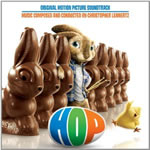
HOP/Christopher Lennertz/Varese Sarabande
Christopher Lennertz’ music for this live action/animated holiday romp is a fun cartoon score, built around an alluring main theme that begins and returns to Easter Island, where a young Easter Bunny trainee named Fred learning the ropes decides to runaway to Hollywood and pursue his dream. The score is a mix of comedy antics (“Dad Misses His Son,” “In The Garage”), hyper-epic and soaring melodies (“Candy Factory,” Coup De Tat,” “Transformation”) and honest, heart-felt poignancy (“Young Fred Gets A Visit,” “Fred Remembers,” “Reunion/Proclamation”) as Lennertz mirrors the sincere heart of Fred. Lennertz characterizes Easter Island with plenty of tiki-fied drums, bells, wind-chimes and the like, before switching gears to mirror the wild turbulence of life in Hollywood, at which time the score drifts between mickey-mouse styled cartoon music, up-tempo action riffing, and touching melodies for Fred’s softer side. The result is a slightly uneven listen, apart from the film’s visual aspect, with the music necessarily halting in its progress to accommodate one antic scene or another (pizzicato strings and furtive flutters of winds); but at the same time the score on disc takes an interesting and variegated journey through a myriad of musical styles, with the central thematic core keeping it well grounded. Tracks like “Fred Realizes” and “Oh, The Guilt” are honest, homespun melodies, while tracks like “Pooping Jellybeans” are definitely in the comic category. “Lament,” sadly at only half a minute in length, contains a beautifully honed violin solo despite its satiric intent. It’s a fun score, just what you’d expect from a film like this, and it serves up a pleasing basket full of badass sweetness.
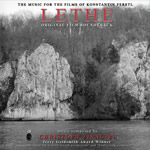
LETHE/TAGE WIE JAHRE/Christoph Zirngibl/Kronos
Kronos Records of Germany has released a fine compendium of these two orchestral scores from composer Christoph Zirngibl, Jerry Goldsmith Award winner in 2007 for best young composer and best original score for a short production. The score that won the latter award is LETHE (2006), one of the two films included in this release. It’s a very striking score for large orchestra, choir, and boy soprano, which performs a breathtaking aural texture from the start with the mesmerizing “Samuel’s Dream.” This score is classically melodic and harmonically rich, carrying a fine pervasive atmosphere of passion and pathos. The second film, translated as DAYS LIKE YEARS (2008), is another short film by the same director (Konstantin Ferstl), is a more contemporary symphonic work with rock combo and Hammond organ added to create a breezy pop sensibility, along with a couple of jazz cues. In both scores, the composer’s gifts for harmony and melody are very well displayed, and both scores are extremely likable and persuasive, capturing a marvelous musical feel and a definite emotional evocation.
For more information on the composer, see: www.christophzirngibl.com
John Mansell’s recent interview with Zirngibl is posted on the CinemaScore/Soundtrack Archives web site.
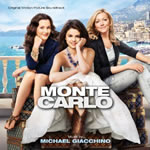
MONTE CARLO/Michael Giacchino/Varese Sarabande
Michael Giacchino turns in a pleasant score for Thomas Bezucha’s romantic comedy about three young women vacationing in Paris who find themselves whisked away to Monte Carlo after one of the girls is mistaken for a British heiress. Consisting mostly of short cues averaging a minute or two (40 of them, total time 48:07, most being variations on the same style of motifs), the music is breezy fluff, focusing on acoustic guitars, pianos, vibes, pattering hand drums, often (but not always) backed by a full orchestra. Giacchino is a rare visitor to the romantic comedy genre (his previous effort in that vogue, 2005’s THE FAMILY STONE, was for the same director), but he accommodates the kind of Manciniesque/Bacharachian tunesmithing this kind of film needs and thrives on. The score begins quietly, with fairly demur soloing, until the girls’ wind up in Monte Carlo, at which time the rhythm section comes to live and big band plays the house; and then everything softens as the girls realize the emptiness of high fashion and the music mirrors their return to more homespun roots. Some tracks, like “Junk in the Trunks”, amp up the jazz/funk quotient, while others, like the second half of that same cue, immerse themselves in glamorous melodies. “Cordelia Arrives” absorb a bit of Monte Carlo-esque big band elegance (and features some blazing trumpet blowing), while “Cordelia’s Not So Suite” chimes with some additional piano and saxophone interplay. It’s a glitzy, alluring, and sophisticated score with sparkling melodies sparring against more introspective interludes. Despite the brevity and plethora of tracks, most of the cues run into one another which makes the score on disc an agreeable listening experience that sounds more like a continual piece rather than a sequence of individual short tracks. Giacchino’s tunes are likable enough; while the album won’t attract the kind of attention his more dramatic blockbusters will, it’s nonetheless an effective score with an appealing geniality and some cool Euro-Rat Pack styled jazz.
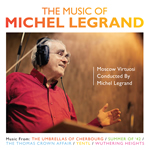
THE MUSIC OF MICHEL LEGRAND/Silva Screen
FILM MUSIC OF HANS ZIMMER VOL.2/Silva Screen
This pair of compilations serves up a double-disc handful of the work of two notable film composers – the jazzy French melodist of the 1960s and ‘70s, and the articulate rhythmist of new millennium action blockbusters. The former, an October 2020 recording of Legrand conducting the Moscow Virtuosi, an ensemble formed in 1979, bringing together the cream of musicians from Moscow’s symphony and chamber orchestras. With the composer at the helm, the music nicely visits some of Legrand’s greatest work including THE UMBRELLAS OF CHERBOURG, THE YOUNG GIRLS OF ROCHEFORT, THE SUMMER OF 42, WUTHERING HEIGHTS, GABLE AND LOMBARD, THE THREE MUSKETEERS, THE THOMAS CROWN AFFAIR and YENTL – at the same time the music is almost entirely familiar and there’s not too much that hasn’t been heard before, with the possible exception of three non-film tracks from Legrand’s repertoire. However, music that had been presented in fairly light form, such as THE UMBRELLAS OF CHERBOURG theme, is powerfully conveyed through the large form symphonic prowess of the Virtuosi, which gives these pieces a marvelously dynamic resonance. This all makes for a fine concert-styled album and it’s great to hear Legrand reprising his best work at the fore of a splendid symphonic orchestra, all in a single release.
The latter release is a follow-up to Silva Screen’s 2007 release The Essential Hans Zimmer Film Music Collection. This double album features a variety of Zimmer’s classic score tracks with the addition of his more recent successes, PIRATES OF THE CARIBBEAN: ON STRANGER TIDES, SHERLOCK HOLMES, INCEPTION, THE DARK KNIGHT, as well as classic tracks from box office hits such as THE LION KING, THE PRINCE OFEGYPT, THE RING, KING ARTHUR, BLACK HAWK DOWN, BATMAN BEGINS, MADAGASCAR, MISSION: IMPOSSIBLE II, and others. It’s all very powerfully interpreted by the City of Prague Philharmonic or London Music Works, some culled from previous compilations, some new for this release. While there’s nothing here not available on its own album, this CD does make for a fine gallery of Zimmer’s continued work, very well performed, and a very pleasing listen. Both releases are available digitally as well as on CD; the latter includes very informative liner notes by Michael Beek about each composer and, for the Legrand album, comments on each track.
See: http://www.silvascreen.com/
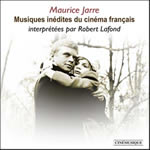
MUSIQUES INÉDITES DU CINÉMA FRANÇAIS/Maurice Jarre/Disques Cinemusique
This compilation which translates as UNPUBLISHED FRENCH FILM MUSIC BY MAURICE JARRE, recreates through electronically sampled performances by Robert Lafond, four of the first scores that Maurice Jarre wrote for features films in his native France: SPOTLIGHT ON THE MURDERER and JUDEX by Georges Franju, SUNDAYS & CYBELE by Serge Bourguignon, and LES ANIMAUX, by Frédéric Rossif. While portions of the latter score were included on Jarre’s 2005 French compilation, Ma Periode Français (Play Time, 2005) and a few cues from JUDEX were included in the “Suite Georges Franju” on Jarre’s concert album, shared with Jose Nieto, Seville Film Music Concerts (Varese, 1991),
Lafond provides four different tracks for ANIMAUX and separates the JUDEX cues into five distinct tracks. Franju’s stylish interpretation of JUDEX (1963) was one of Jarre’s finest early scores, if not one of his finest ever. The film’s masked ball sequence (“Le Bal Masque”) harbors an infectious and alluring waltz in what would become its composer’s signature style, capturing an striking mood of elegant mysterioso, while the finale with its nightmarish, ballet-like struggle between the two women on the rooftop (“Poursuite Et Final”) is chaotic mélange of eerie, cycling keyboard figures (serving for the piano and xylophone of Jarre’s original) and reverberant low piano notes that gave the scene a haunting and unrelenting atmosphere of strangeness. Lafond also captures the delirious joy of Jarre’s bistro accordion tune (“Accordeon Bistro”). The five tracks from Franju’s 1961 PLEINS FEUX SUR L’ASSASSIN, a period murder mystery, are also distinctly recognizable as Jarre and built around a waltz figure which, in its continual revolutions, becomes a dizzying and unsettling main theme, in contrast to his straightforward romantic theme for Jeanne that captures the characters vulnerability to manipulation by L’Assassin, a piping medieval motif in “Son et Lumiere,” and an interpretation of “The Agony of the Count” which models the movements of the dying knight while reflecting the sound of his mechanical wind-up puppet. The two tracks from SUNDAYS & CYBELE, an Oscar–winning story of the friendship between an amnesiac aviator and a 10-year old girl seeking attention; Jarre’s score was quite brief as the film contained a large amount of classical and folk music in its soundtrack. The two tracks here include a sobering and furtive suite, and a pair of dazzling merry-go-round tunes bridged by a raucous drum solo. For Rossif’s 1963 nature documentary, LES ANIMAUX, the music is presented in four distinct tracks that suggest specific families of animals as Jarre musically interprets early vertebrates, insects (his insect march would almost be suitable for a monster movie before morphing into a playful and percussive scherzo; part of the track suggests a bit of the sound in DAY OF THE DOLPHIN), and horses (a gentle piano sonata), concluding with an Eric Satie-styled piano and synth flavored melody. While the samples are noticeable and one regrets the lack of a full orchestral interpretation, Lafont does an admirable and faithful job in reproducing these tracks, and DCM has done Jarre and his fans a fine service by making them available for the first time. The release included a bilingual 20-page booklet featuring track by track notes by producer Clément Fontaine and an introduction by Jacques Hiver, the European Jarre specialist.
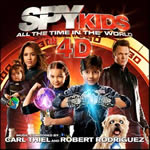
SPY KIDS: ALL THE TIME IN THE WORLD/ Carl Thiel & Robert Rodriguez/Lakeshore
Multi-hyphenate director Robert Rodriguez rejoins composer Carl Thiel (MACHETE, GRINDHOUSE: PLANET TERROR) for this fourth romp through the world of the Spy Kids. In this outing, the story has to do with retired secret agent Marissa Cortez Wilson (Jessica Alba) dealing with a new baby and twin whiz kids, and a spy-hunting husband who is fortunately lousy at his job. The plot eventually connects Wilson to the Spy Kids from the first three films who arrive to help her save the world – and her family. “When it came time for this SPY KIDS film, I not only relied on some of the themes from the first films, but leaned heavily on my long time collaborator and producer of my scores and rock albums, Carl Thiel,” said Rodriguez. “Robert and I wanted to keep some of his original SPY KIDS melodies in this score, but also infuse the movie with a new life, since there were so many new characters, including the kids,” added Thiel. “Both of us are very theme oriented, so when we sat down to spot the movie, we made a list of the characters that needed their own theme… like the Timekeeper, the kids, Joel McHale’s ‘Spy Hunter’ and Jessica Alba’s ‘Spy Mom’,” Thiel described. He wrote up sketches of possible themes and showed them to Rodriguez. “We chose the ones that felt like the best fit. Once we had that as a base, I could draw from the pool of melodic themes to score each specific scene. There’s practically wall to wall music.”
Rodriguez brings in his SPY KIDS theme from the first film to give the score its central familiarity, although most of the score is occupied with funky guitar and keyboard riffing that supply adequate action rhythmatics. The score therefore is mostly a cartoon score, full of action drive – one chase after another – although Rodriguez’ central theme continues to capture a slight James Bond/spy feel and is woven effectively throughout the new score’s ongoing propulsiveness. “The Timekeeper” provides a very cool villain theme, exuding out of the SPY KIDS theme itself to wallow in arrogant prancing and give the score a good countermotif. But too much of the score is built out of the same building blocks, and the main riff soon loses some of its interest on the album.
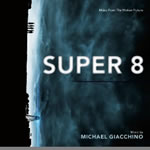
SUPER 8/Michael Giacchino/Varese Sarabande
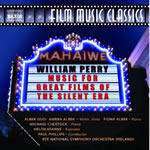
A very welcome and thrilling old-fashioned orchestral score in a splendid 1980ish John Williams vogue. The film, an exciting and fun mash-up of E.T., CLOSE ENCOUNTERS, JURASSIC PARK, and THE GOONIES, is produced by Steven Spielberg and directed by J. J. Abrams (whose connection with the composer from STAR TREK and TV’s ALIAS and LOST brought Giacchino into the project), although the picture is clearly a Spielberg film as every nuance of the storytelling and characterization is highly Spielbergian. Within that sensibility, Abrams endearingly recaptures the period of the late 1970s and the eager innocence of the young group of friends even while focusing on the evident savagery of the alien creature which (like Spielberg’s delineation of the scary aliens who turn out to be good guys after all in CLOSE ENCOUNTERS) tends to contradict the sympathy the story later places upon it. Giacchino’s score eloquently embodies all of these aspects in an orchestral score that is refreshingly absent of the now-stereotypical hybrid/rhythmic musical elements that are so pervasive in modern genre and action filmscoring. While this is clearly a Giacchino score in a Williams mode, the composer can’t help but channel, likely at the insistence of his bosses and appropriately so for what the story is, entire swaths of E.T. and CLOSE ENCOUNTERS in supporting this story of an abandoned and misunderstood alien that harbors a lot of angst and has zero interest in the frakking Reeses pieces. Based on a very welcome melody that beautifully embodies family, set against an almost morbidly malevolent, downsliding string motif for the alien (both playing off each other very well in the cue “Thoughts of Mom”), and amongst a wonderfully Williamsesque action motif for stabbing horn chords and flailing strings. The music ranges from immensely bombastic to poignantly intimate as it reflects all of the AbramSpielbergian aspects of the story. Nicely represented on disc (33 tracks at more than an hour and a quarter) this is a vastly superior summer movie score that suggests a classic form of filmscoring that should not be lost in today’s hybrid mash-up of forms and styles, however epic in scope and potent in largess.Naxos has released Music for Great Films of the Silent Era, featuring compositions of American composer William Perry, who has written more than a hundred new scores for silent movies. These are not the original silent movie scores but new compositions for restorations that Perry composed in his role as Music Director of the Film Department at the Museum of Modern Art in New York City. Perry provided piano accompaniments to the showings of silent films at the Museum, many of which were brought to worldwide audiences through his TV series THE SILENT YEARS. On this album,three lengthy tracks transpose many of Perry's piano compositions for full orchestra, performed for this recording by the RTE National Symphony Orchestra of Ireland, conducted by Paul Phillips. Comprehensive album notes identify the films and describe the music in detail. See: www.naxos.com/catalogue/item.asp?item_code=8.572567
_______________________________________________________________________________
Soundtrack & Music News
Jack J. Hayes, an Oscar-nominated composer and orchestrator who worked on more than 200 films during a Hollywood career that spanned 60 years, died of natural causes Wednesday in Coeur d'Alene, Idaho. He was 92. Hayes dies at 92. Hayes was best known as an orchestrator, working with some of Hollywood’s top conductors over two decades, from 1955 to 1976, including Alfred Newman, Elmer Bernstein, Henry Mancini, Randy Newman, Michael Giacchino, and others. While Hayes was considered an unsung hero of Hollywood film music for his orchestrational contributions, he modestly denied suggestions that he and his fellow orchestrators were really responsible for many great scores. “It’s rumor-mongering and it isn't fair to the composer,” Hayes said in a rare interview in 1986, quoted by Jon Burlingame in an obituary for the Film Music Society. “All the people I've worked with write their own music and each offers a very distinct, unique talent that makes a score what it is.”
But the composers acknowledged Hayes for his efforts. “He made us all sound like musical geniuses, even on our worst days,” said John Beal in a Facebook Posting.
Read the Variety obit here
See Jon Burlingame’s remembrance at the Film Music Society web site.John O'Brien, a composer and music supervisor for film and TV who provided material for IRON MAN and its sequel, PINEAPPLE EXPRESS, FOUR CHRISTMASES and COUPLES RETREAT, was found dead on Saturday in a Chicago hotel room. He was 45. Film producer and former child actor Peter Billingsley discovered O'Brien in his hotel room; an autopsy was inconclusive, but toxicological studies are pending. O'Brien worked with Billingsley and actor-director Jon Favreau on a number of films. O'Brien earned his first screen credits on the 1997 film NIGHTWATCH and 1999's ANYWHERE BUT HERE.
He also worked in TV, acting as music supervisor on ABC's brief David Arquette series IN CASE OF EMERGENCY in 2007 and composing the theme music for last season's DETROIT 1-8-7.
O'Brien most recently worked as music supervisor on the Will Arnett-Christina Applegate sitcom UP ALL NIGHT, which NBC will premiere Sept. 14. – via Variety.
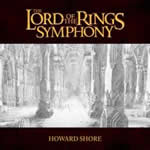
Howard Shore’s new record label, Howe Records, will release on Sept. 13th the world première recording of Shore's Lord of the Rings Symphony. The composer says of the project, “J.R.R. Tolkien’s THE LORD OF THE RINGS is very close to my heart. I have great respect for his writing and share the values he weaves into these stories of courage and honor, friendship and sacrifice. I love the inner aspect of his writing, the detail of the relationships, and his observance of nature. The Lord of the Rings Symphonywas created from the nearly twelve hours of music written for THE LORD OF THE RINGS films. Maestro John Mauceri first suggested I create this work from the film scores. We worked together to adapt the scores into the six movements that reflect each of the six books of J.R.R. Tolkien's The Lord of the Rings.” The work is performed by The 21st Century Symphony Orchestra conducted by Ludwig Wicki, who personally selected the musicians who perform on this recording. – via Doug Adams on Facebook.
The album is now available for pre-order on amazon and elsewhere.Tadlow Music has released Lucie Svehlova – The Lark Ascending, an album of classical and film music romances performed by the noted virtuoso violinist and concert master of the City of Prague Philharmonic. The film music pieces, focusing on Svehlova as soloist supported by the Philharmonic (with Nic Raine, Miriam Mencoiva, and David Arnold assuming conducting services ), include Andre Previn’s FOUR HORSEMEN OF THE APOCALYPSE, John William’s SCHINDLER’S LIST (three cues), Maurice Jarre’s THE FIXER, Miklos Rozsa’s EL CID and PRIVATE LIFE OF SHERLOCK HOLMES, and Nigel Hess’ LADIES IN LAVENDER.
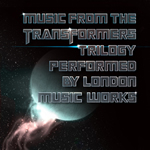
The Transformers Trilogy is now available as a digital download from the Silva Screen website, with a CD release scheduled for October 3rd. This release is a collection of Steve Jablonsky’s epic scores; The digital release comes with an exclusive 17th digital-only track and a downloadable booklet. On September 19th, Silva Screen Records will release the soundtrack to new UK adaptation of John Le Carre’s TINKER, TAILOR, SOLDIER, SPY (previously filmed in 1979 as a TV drama, starring Alec Guinness. Tomas Alfredson, known for the Swedish vampire film “Let The Right One In” directs Gary Oldman in the Guinness role, supported by Colin Firth and Tom Hardy. Alberto Iglesias composed the score .
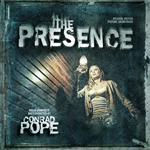
Screamworks Records, the only record label exclusively devoted to music from horror films, will release Conrad Pope’s music from the independent horror movie THE PRESENCE. The film stars Mira Sorvino, Shane West, and Tony Curran in a darkly romantic ghost story about a woman who travels to an isolated cabin where she finds herself stalked by an apparition who has come to inhabit her space as his own. About Pope’s beautiful and hauntingly eerie orchestral music for THE PRESENCE, writer/director Tom Provost said that it’s “beautifully crafted, very original and often surprising. The music not only supports and adds to the movie, but like the cabin in which the movie takes place, becomes a character all its own. It is a remarkable achievement.” Screamworks’ CD release accompanies the Lionsgate DVD release of the film in the USA on October 4th.
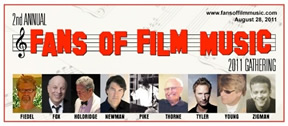
The 2nd Annual Fans of Film Music Gathering took place in Los Angeles last weekend, with a gaggle of fans and composers meeting and greeting. Read Mark Ford’s report at the Film Score Monthly web site here.
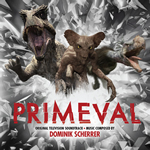
Finally, after five successful series on TV, the original music from ITV dinosaur adventure series PRIMEVAL, gets a soundtrack album release courtesy of Swedish soundtrack record label MovieScore Media. The action-packed 75-minute album features selections of the original score music composed by Ivor Novello Award-nominated composer Dominik Scherrer from the first three series of the popular show.
PRIMEVAL premiered on ITV in 2007, presenting a story about a team of researchers who investigate unexplained anomalies that rip holes in the fabric of time, allowing creatures from the past, and the future, to roam the modern world. About his rousing orchestral music for the series, Dominik Scherrer said that ”on a show like Primeval the music does quite a lot, and there is also quite a lot of it – perhaps around eighty-five percent of screen time is scored, sometimes it may just be a little pulse in the background, other times full orchestral action extravagance.” About the striking theme, Scherrer explained that ”the central feel is that of majesty and adventure, reflecting the momentous occasion of mankind linking up with the pre-historic past and also the majesty of the creatures themselves – they are dangerous and wonderful.”The soundtrack album will be released both digitally online via all major outlets as well as on CD on September 20, 2011. (See my interview with Dominik Scherrer about his PRIMEVAL scores in my Feb. 25, 2010 column.)
LaLaLand Records has reissued of James Horner's classic score to COMMANDO, the 1985 Schwarzenegger action flick. Remastered and expanded with bonus tracks, the limited release (3000 units) is produced by Nick Redman and featured new album notes written by Jeff Bond. Later this Fall, La-La-Land Records will be releasing a 3 CD set of Shirley Walker's music for SPACE: ABOVE AND BEYOND.
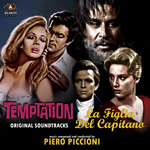
Kronos Records has released an album containing two musical gems from Italian composer Piero Piccioni; TEMPTATION (1968) and LA FIGLIA DEL CAPITANO (1965). The music on TEMPTATION is beautiful, chilled and sensual; the ensemble plays a lovely blend of jazz and lounge with hints of bossa that make this a very recognizable Piccioni work, an easy listening, chill score for the 1968 film directed by Lamberto Benvenuti and starring Mark Damon and Stefania Careddu. LA FIGLIA DEL CAPITANO (The Captain’s Daughter) was a TV adaptation of Puskin’s “Kapitanskaya Dochka”, directed by Leonardo Cortese and starring Amedeo Nazzari, Umberto Orsini and Lucilla Morlacchi shows us a more dramatic facade to Piccioni’s ample composing skills. This score for orchestra is solemn, romantic and very evocative of the high period of classic Italian drama. www.kronosrecords.com
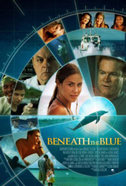
Composer Alan Derian’s latest score is for film BENEATH THE BLUE, the sequel to EYE OF THE DOLPHIN which Alan Derian scored in 2007. The film stars David Keith, Michael Ironside, and George Harris. Derian’s music attains a compelling sound with a depth of orchestration that is quite expressive, really giving the feeling of being in the depths. “The film was nice in that there are long sections with visuals only, so it gave me the opportunity to open up with the writing,” Derian said. The composer hopes to gain a soundtrack album detail; in the meantime samples of the score can be heard on Derian’s web site and are definitely worth checking out.
Composer/guitarist Gregg Nestor reported that he recently finished working on the finished restoration on the 1927 classic Paramount film, WINGS. “The original 1927 full orchestral score by John Stephen Zamecnik was re-recorded,” Nestor said in a posting to Facebook’s Silent Film Music group. “Bi-plane effects as per the original cue sheets were reconstructed by Ben Burtt of Lucasfilm, and the final mix was completed at Lucasfilm.” The film is newly scanned and painstakingly restored for release soon.
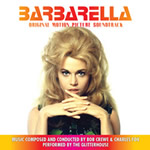
Harkit Records has issued a new version of their first release, the soundtrack to the far-out 1968 sf classic BARBARELLA. This new version features the original title sequence as well as an alternate version of the main theme by Bob Crewe's Glitterhouse. The lavishly illustrated accompanying booklet also features a brand new essay on the film and its score by your’s truly.
See: http://www.harkitrecords.com/barbarella.html
Known for his long history of providing compelling music for documentary films, composer Jonathan Zalben has provided the score to THERE’S SOMETHING WRONG WITH AUNT DIANE. The HBO documentary revisits the mysterious tragedy of Diane Schuler who two years ago rose to infamy when she drove the wrong way on New York’s Taconic Parkway for nearly two miles before smashing into an oncoming SUV leaving a devastating death tally of eight people including Schuler’s own daughter. The film investigates the enduring mysteries of the incident in an effort to understand what went wrong.
Zalben may be known for his documentary work, but he’s no stranger to the big screen. His company, First Frame Music, provides music supervision for a wide range of films and also handles music licensing and score. The composer himself has written original music (and sometimes even played violin) for the upcoming feature SON OF MORNING, a stylized satire about the media in the age of the 24-hour news cycle. See the composer’s web site at http://jonathanzalben.com/Swedish composer Johan Söderqvist (LET THE RIGHT ONE IN) was honored by the Norwegian film industry when his score for KING OF DEVIL’S ISLANDwon the Amanda (the Norwegian equivalent of the Oscar) for best music. Johan was also nominated in the same category for another film, LIMBO. It is not the first time that Johan Söderqvist won an Amanda. Two years ago, he won the prize for the original score to Erik Poppe’s TROUBLED WATER.
The Alfred Newman Symposium for Musicological Film Studies, in association with the Society for American Music and the Institute for Film Music Studies, is preparing a symposium, scheduled for next February, on From Nineteenth-Century Stage Melodrama to Twenty-First-Century Film Scoring: Musicodramatic Practice and Knowledge Organization. “The Symposium will focus on exploring this system of musicodramatic knowledge organization and on understanding both its origins in stage melodrama and how the practice continues as a living tradition in film scoring today. To a greater or lesser extent current practice can be seen as ‘new wine in old bottles,’ because while musical styles have changed, the same underlying musicodramatic schema has remained relatively unchanged.” Papers and proposals for panel sessions and roundtables on this topic or other musicological aspects of film study should be sent to William H. Rosar at rosar@ifms-jfm.org by October 15, 2011.
For details, see: http://www.usc.edu/libraries/about/programs_exhibitions/events/FilmMusicClose Encounters Of The Worst Kind is an unconventional and startlingly truthful autobiographical memoir by the distinguished American composer-conductor Phillip Lambro, known for scoring MURPH THE SURF, CRYPT OF THE LIVING DEAD, and the first score for Polanski’s CHINATOWN. It includes little known highly personal and candid recollections and recounting of witty evocative situations and stories which Phillip Lambro has personally experienced during his interesting and varied life with an unbelievable diverse cast of famous personages ranging from Salvador Dali, Frank Sinatra, Jack Benny, Huntington Hartford, Howard Hughes, and Roman Polanski; to John F. Kennedy, Sylvia Plath, Harold Lloyd, Richard Nixon, Jack Nicholson, Alfred Hitchcock, Steven Spielberg, Antonio Carlos Jobim, and many more.
To order, click here:
http://store.fortytwotradingco.com/books.html_______________________________________________________________________________
Games Music News
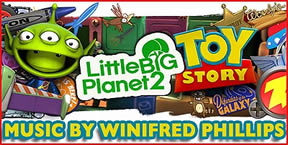
Composer Winifred Phillips’s latest project is the comically adventurous score for LittleBigPlanet 2: Toy Story, the first full downloadable-content release for one of the best reviewed games of the year. Following her two wildly popular tracks for the initial release of LittleBigPlanet 2in January, Phillips served as the sole composer for this newly released Toy Story game, creating a musical score that features such divergent styles as big band jazz, cowboy blue grass, and symphonically epic science fiction.
"I knew that the game would require a wide breadth of musical styles. It was a challenge, but also tremendous fun," said Phillips, whose awards include the Hollywood Music in Media Award and the Interactive Achievement Award from the Academy of Interactive Arts and Sciences. "The game world of LittleBigPlanet is amazingly vibrant and energetic, and everything is imbued with a great sense of humor. I'm always excited when I get to create more music for the world of LittleBigPlanet."
The music expands the fun that Phillips invested in her original LBP2 score and added elements that fit the TOY STORY environment – a rollicking honky tonk Western theme, an expressive, epic-styled outer space motif, and a lively Big Band tune – without using any of the actual TOY STORY movie themes. “There is no music from the TOY STORY movies in the game,” Phillips explained. “In LittleBigPlanet 2: Toy Story, you play the game as the hero of LittleBigPlanet – Sackboy – but you are playing in the world of the TOY STORY movies, and you get to wear costumes so that you look like 'Sackboy' versions of the TOY STORY characters. There is also a story in the game that is very much rooted in the imaginative play of the TOY STORY world.” The music tracks created by Phillips for the game feature a fully interactive "Cowboy" track. "For Woody's levels, I composed a high-energy blue-grass song that could be split into six interactive layers," said Phillips.
"Designing the interactive portions of the LittleBigPlanet 2: Toy Story score was a particular challenge," said award-winning music producer Winnie Waldron, who worked with Phillips on the project. "The entire score had to convey the sense of imaginative play that is such an important part of what TOY STORY is all about.
For more on Winifred Phillips and LittleBigPlanet 2: Toy Story, see the composer’s web site.
For an interview with Phillips, in which she discusses her work on the LittleBigPlanet 2, read her interview on the Game Spot website.
Celebrated composer duo Cris Velasco (God of War Series) and Sascha Dikiciyan (TRON: Evolution) have created an epic original score for Relic EntertainmentTM's upcoming 3rd person action/shooter, WARHAMMER® 40,000®: SPACE MARINE® published by THQ. Set in the WARHAMMER 40,000 universe created by Games Workshop®, SPACE MARINE is scheduled to be released on September 6th. Composers Cris Velasco and Sascha Dikiciyan commented, “SPACE MARINE has been one of the most creatively satisfying projects of our scoring career. This being the first third-person shooter in the WARHAMMER franchise, we were honored to write an original score that lives up to the games' prestigious history and also pushes the series forward with a bold and fresh sound.”
The WARHAMMER 40,000: SPACE MARINE original soundtrack will be included in the Collector's Edition now available to pre-order.
For more information please visit http://www.spacemarine.com.Veteran television composer Mick Kiely (ITV, RTE) has created the original music score for Codemasters' upcoming intense arcade-style shooter game BODYCOUNT. Kiely was selected by Codemasters to create the hybrid soundtrack incorporating an '80s arcade aesthetic. Kiely's hybrid music score blends orchestra and ethnic instrumentation while maintaining the game’s near-futuristic and arcade vibe with modern electronic music elements. To ensure an authentic, immersive musical experience, the Irish composer recorded with a world-class 60-piece string section, live Asian wind instruments and African battle rhythms performed by native tribes in Ghana. "BODYCOUNT was an awesome project to work on,” said Kiely. “Codemasters' vision for the game was inspiring from day one. It was a lot of fun to be involved in and the magic of breathing life into the game's characters and gameplay gave me endless pleasure. The fusing of settings was a good call by the team at Codemasters' Guilford studio and definitely gave the score an edge."
BODYCOUNT ups the ante for no-nonsense shooter fun as players shred through the game world with their bullets and spectacularly blow enemies through walls. Developed by Codemasters' Guildford Studio, BODYCOUNT will be released for Xbox 360 and PlayStation 3 on September 2nd.
For more information visit http://www.bodycountgame.com.
Randall D. Larson was for many years senior editor for Soundtrack Magazine, publisher of CinemaScore: The Film Music Journal, and a film music columnist for Cinefantastique magazine. A specialist on horror film music, he is the author of Musique Fantastique: A Survey of Film Music in the Fantastic Cinema and Music From the House of Hammer. He now writes for CinefantastiqueOnline and has written liner notes for more than 70 soundtrack CDs for such labels as La-La Land, Percepto, Perseverance, Harkit, and BSX Records. For more information, see: www.myspace.com/larsonrdl A massively re-written and expanded Second Edition of Musique Fantastique will be published this Spring, see: www.creaturefeatures.com/products/books/musique-fantastique/
Randall can be contacted at soundtraxrdl@gmail.com
 |
 |
 |
Music Scores and Soundtrack CDs!
